How to Check if Your Eye Drops Have Been Recalled Due to Contamination
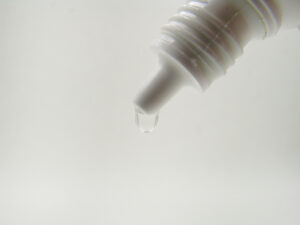
A series of national recalls involving contaminated, non-sterile ophthalmic solutions has raised serious public health concerns across the United States. Bacterial and fungal contamination in over-the-counter and prescription eye drops can lead to severe eye infections, permanent corneal damage, and total vision loss.
Determining whether your medication is safe requires verifying active FDA enforcement notices, lot numbers, and manufacturer warnings. If you suffered eye infections or vision loss after using artificial tears, consult a specialized recalled eye drops lawsuit lawyer at Searcy Law to evaluate your legal options, or explore our broader resources managed by a dangerous product recall attorney.
Searching the FDA Recall Database for Contaminated Eye Drops
The fastest official method to confirm an eye drop safety warning is querying the U.S. Food and Drug Administration (FDA) Recalls, Market Withdrawals, & Safety Alerts database. However, generic searches can miss critical warnings due to specific chemical indexing.
Follow these steps to conduct an accurate search:
- Search Manufacturer & Brand Names First: Generic searches for “eye drops” often omit specific recalled products. Query exact manufacturer names (such as Apotex Corp., Pharmedica USA LLC, or Global Pharma Healthcare) or product trade names (such as Purely Soothing or Brimonidine Tartrate Ophthalmic Solution).
- Verify National Drug Code (NDC) & Lot Numbers: Locate the 10- or 11-digit NDC number and manufacturing lot code printed on the exterior carton or bottle label. Compare these against the FDA’s posted recall notices to confirm whether your specific batch is affected.
- Account for Database Posting Delays: FDA database updates can lag behind voluntary manufacturer announcements or urgent press releases. If your product exhibits discoloration or causes burning, discontinue use even if it does not yet appear in the public database.
What to Do If Your Eye Drops Are Recalled or Non-Sterile
If you discover that your eye drops are subject to a safety recall—or if you suspect contamination due to sudden eye redness, discharge, severe pain, or blurred vision—taking immediate action is essential to protect both your health and your legal rights:
- Discontinue Use Immediately: Stop using the product right away. Do not wash out or discard the remaining liquid.
- Preserve Physical Evidence: Store the eye drop bottle, original box packaging, store receipts, and purchase records in a clean, sealed plastic bag. Physical testing of the remaining solution can provide key scientific proof of bacterial or fungal contamination.
- Seek Immediate Emergency Ophthalmic Care: Visit an ophthalmologist or emergency room immediately. Inform the treating physician that you used potentially contaminated eye drops so they can perform diagnostic cultures and initiate appropriate antimicrobial treatment.
- Request Full Medical Records: Obtain copies of your emergency room charts, culture test results, physician progress notes, and prescription records.
Do You Need a Formal Recall to File a Product Liability Lawsuit?
A common misconception among injured consumers is that an official FDA recall must be issued before filing an injury claim. Under strict product liability law, pharmaceutical manufacturers and distributors are legally responsible for selling defective or non-sterile products regardless of whether a formal recall has been declared.
If a manufacturing facility fails to maintain mandatory sterile manufacturing conditions—leading to bacterial contamination such as Pseudomonas aeruginosa—the manufacturer can be held strictly liable for resulting injuries.
To build a successful product liability lawsuit without a formal recall, your legal team must prove:
- The eye drop product contained a manufacturing defect (such as non-sterility or foreign particulate matter) when it left the manufacturer’s control.
- You used the product as intended.
- The contaminated product directly caused your eye infection, corneal ulcer, surgical intervention, or vision impairment.
5 Examples of Eye Drop Recalls
We’ve also compiled information on major eye drop recalls below. If you used any of these products and experienced an infection or adverse consequences, contact our trial team to evaluate your claim:
- Apotex (Apotex Corp.): Recalled Brimonidine Tartrate Ophthalmic Solution (0.15%) due to cracked bottle caps presenting contamination risks.
- Purely Soothing (Pharmedica USA LLC): Recalled due to non-sterility concerns posing risks of severe eye infections and vision loss.
- Artificial Tears Lubricant Eye Drops (Global Pharma Healthcare): Recalled due to bacterial contamination linked to adverse events, vision loss, and systemic infections.
- Multiple Brands (Family Dollar): Recalled multiple over-the-counter eye drops due to improper storage temperature controls.
- Puriton (Kadesh Inc.): Recalled due to lack of sterile manufacturing controls during production.
Speak with a Recalled Eye Drop Injury Lawyer
Challenging negligent pharmaceutical companies and retail distributors requires extensive financial resources, scientific expert analysis, and aggressive trial advocacy.
For over 45 years, the mass tort trial attorneys at Searcy Law have litigated complex defective product and dangerous drug claims, securing billions of dollars in verdicts and settlements for injured consumers nationwide.
We represent all product liability clients on a contingency fee basis—meaning you pay zero upfront costs, zero out-of-pocket expenses, and zero legal fees unless our firm successfully recovers financial compensation for you.
If you or a family member suffered a severe eye infection or vision loss after using recalled or contaminated eye drops, call Searcy Law today at 800-780-8607 for a free, strictly confidential case evaluation.
Share This