Freight Broker Liability After Montgomery v. Caribe Transport: A Definitive Guide for Plaintiff’s Attorneys
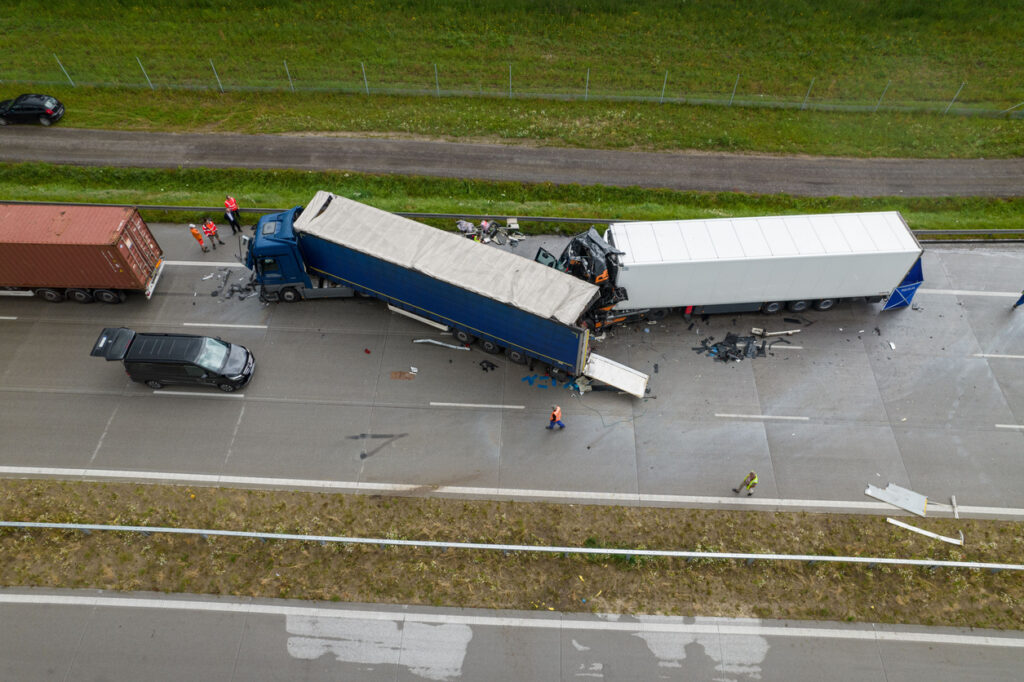
The difference between a $1 million recovery and a full recovery for your client may be one phone call.
On May 14, 2026, the United States Supreme Court issued a unanimous decision in Montgomery v. Caribe Transp. II, LLC, No. 24-1238, 2026 WL 1336188 (U.S. May 14, 2026), permanently reshaping the landscape of trucking accident litigation in America. The Court held that negligent-hiring claims against freight brokers are not preempted by the Federal Aviation Administration Authorization Act (FAAAA). With one ruling, the preemption defense that had been killing these claims in the Seventh and Eleventh Circuits was eliminated nationwide.
The courts are already acting on it. Just four days later, on May 18, 2026, the United States Court of Appeals for the Fourth Circuit vacated a freight broker’s summary judgment and remanded the case for further proceedings in light of Montgomery.
This guide explains the ruling, its immediate real-world impact, the litigation framework, and most importantly, how to leverage broker liability to achieve full and fair recovery for your client.
To discuss a brokerage angle in your trucking case, contact Cal Warriner directly at Searcy Denney.
What Is a Freight Broker and Why Does It Matter?
Most people do not realize that the truck that struck them may have been selected by a company that never touched the vehicle, never hired the driver, and was nowhere near the scene of the crash. That company is a freight broker, a transportation industry intermediary that connects companies shipping goods with the motor carriers (trucking companies) that physically move them.
Today, approximately 28,000 brokers arrange transportation for roughly one-third of all freight shipped in the United States, coordinating among more than 780,000 carriers. Brokers profit from the spread between what a shipper pays and what a carrier earns. Until Montgomery, they largely profited with zero accountability when those carriers caused catastrophic crashes.
Why Montgomery Matters: The Insurance Reality Behind Trucking Litigation
Every experienced trucking attorney knows the painful arithmetic of these cases. Motor carriers, particularly smaller and mid-sized trucking companies, routinely disclose only $1 million in available liability coverage for crashes that produce catastrophic damages: traumatic amputations, spinal cord injuries, traumatic brain injuries, and wrongful death. A $1 million policy does not begin to compensate a client whose life has been altered forever. Without a second responsible defendant, the recovery is capped far below what the case is actually worth.
Montgomery changes that math.
Freight brokers, especially the large national operators such as C.H. Robinson, Echo Global Logistics, Coyote Logistics, and Transplace, are well-capitalized corporations with insurance programs that dwarf carrier minimums. Adding a negligent-hiring claim against the broker adds a financially meaningful responsible party capable of supporting the full recovery your client deserves.
In this post-Montgomery world, every catastrophic trucking case must now be screened for broker involvement at intake.
How This Ruling Changes the Landscape of Trucking Accident Litigation Nationwide
A New Defendant in Every Serious Trucking Case
Before Montgomery, plaintiff attorneys faced federal preemption arguments that effectively eliminated brokers as defendants. The ruling wipes out that defense in all 50 states. In every serious trucking accident case going forward, the first question your attorney should ask is: Was a broker involved in dispatching this truck?
Brokers Now Have a Duty of Ordinary Care in Carrier Selection
The ruling establishes that brokers owe a duty of reasonable care when selecting carriers. That means they must:
- Review FMCSA safety ratings before hiring a carrier
- Investigate carriers with “conditional” or “unsatisfactory” safety ratings
- Check CSA (Compliance, Safety, Accountability) BASIC scores
- Not knowingly hire carriers with documented histories of driver-qualification failures, hours-of-service violations, or poor crash records
When brokers ignore red flags, such as Caribe Transport’s conditional rating, and put that carrier on the highway anyway, they can now face liability for the consequences.
Increased Pressure on Brokers to Vet Carriers
Even Justice Kavanaugh’s concurrence, the most industry-sympathetic opinion in the case, acknowledged that “if brokers can be held liable for disregarding poor safety records, they have a strong incentive to do business only with safe and reliable motor carriers.” The ruling creates a market incentive for the entire freight brokerage industry to raise its safety standards. That is good news for every driver on America’s highways.
The Ruling Is Already Being Enforced: Fuelling v. Echo Global Logistics
Four days after the Supreme Court ruled in Montgomery, the United States Court of Appeals for the Fourth Circuit issued an order in Fuelling v. Echo Global Logistics, Inc., No. 25-1217 (4th Cir. May 18, 2026), that illustrates exactly how quickly this ruling is reshaping pending litigation across the country.
Angela Fuelling brought the case individually and as personal representative of the estate of James Fuelling, who was killed in a crash involving a truck booked by Echo Global Logistics. The District Court for the District of South Carolina had granted Echo Global’s motion for summary judgment, holding that the FAAAA preempted the negligent-hiring claim. The Fourth Circuit placed the appeal in abeyance pending the Supreme Court’s resolution of Montgomery.
On May 18, 2026, the Fourth Circuit acted without delay. Entered at the direction of Judge Wynn with the concurrence of Judges Thacker and Harris, the order is two paragraphs: the case is removed from abeyance, the district court’s grant of summary judgment is vacated, and the case is remanded for further proceedings in light of Montgomery v. Caribe Transp. II, LLC,No. 24-1238, 2026 WL 1336188 (U.S. May 14, 2026).
Fuelling is not an isolated development. It is the first visible wave of what will be a broad re-litigation of cases that were dismissed or stayed on FAAAA preemption grounds.
What This Means for Florida Trucking Cases
Florida is a high-volume trucking state. I-95, I-75, the Florida Turnpike, and I-10 all serve as critical freight corridors, and South Florida’s ports generate enormous trucking traffic. Florida follows comparative fault principles, meaning that multiple defendants, the driver, the carrier, and now the broker, can each be held proportionately responsible for a victim’s damages.
As a personal injury attorney at Searcy Denney in West Palm Beach, our firm handles catastrophic trucking accident cases throughout Florida and across the country. The Montgomery decision gives us a powerful avenue to pursue full and fair compensation for our clients, particularly in cases involving:
- Catastrophic injuries: amputation, TBI, spinal cord injuries
- Wrongful death claims where carrier insurance is insufficient
- Cases with documented carrier safety violations at the time the broker hired them
- Large national brokers such as C.H. Robinson, Echo Global Logistics, Coyote Logistics, Transplace, and others

The Legal Framework
Litigating a Broker Case Takes Real Resources, and That Is Where Searcy Denney Comes In
A broker negligent-hiring case is not an ordinary trucking case with a new defendant. It is multi-defendant litigation against billion-dollar corporate defendants represented by national defense firms with seven-figure budgets. These defendants fight hard and spend freely. To prosecute one of these cases effectively, a firm must bring:
- Aggressive preservation demands targeting broker dispatch records, carrier vetting files, internal communications, and onboarding documentation before deletion destroys them;
- Deep working knowledge of the FMCSA and DOT regulatory framework, including safety ratings, CSA BASIC scores, inspection history, and out-of-service rates;
- Knowledge of FMCSA and DOT rules and regulations placed on commercial drivers;
- Knowledge of regulations that apply to interstate vs. intrastate carriers;
- Network of expert witnesses in transportation safety, brokerage industry standards of care, and accident reconstruction who can connect documented safety deficiencies to the mechanism of the crash;
- The financial capacity to fund litigation that can easily cost several hundred thousand dollars before trial;
- A trial team that can translate FMCSA data and broker decision-making into a verdict;
Searcy Denney has the infrastructure, the trial team, the expert relationships, and the financial resources to take these cases the full distance. We know which documents to demand, which regulations apply, what the industry standard of care actually requires, and how to put it all in front of a jury. That capability is built over years of complex transportation litigation, and it is what we bring to every co-counsel relationship.
If your client’s case deserves a broker claim, your client deserves a co-counsel that can execute one. That is Searcy Denney.
The Discovery Blueprint
Step One: Establish Broker Involvement
Confirm broker involvement through the bill of lading, load and rate confirmation sheets, the shipper-broker contract, and FMCSA SAFER verification of the broker’s MC number. Issue preservation demands the same day.
Step Two: Lock In the Carrier’s Safety Profile
The case lives or dies on what the broker knew, or should have known, at dispatch. Preserve:
- FMCSA Safety Rating as of the dispatch date. In Montgomery, Caribe Transport carried a “conditional” rating with deficiencies in driver qualification, hours of service, vehicle maintenance, and crash rate
- CSA BASIC Scores, including unsafe driving, crash indicator, hours-of-service compliance, vehicle maintenance, and driver fitness
- Inspection and out-of-service history for drivers and vehicles in the 24 months before the crash
- Prior crash history from the FMCSA crash database
- SMS Alert status at the time of dispatch
Step Three: Expose the Vetting Process
Through interrogatories and 30(b)(6) Corporate Representative depositions, build toward one of two conclusions: either no meaningful vetting protocol existed, or the broker violated its own protocol. Either way, negligence is proven.
Step Four: Retain the Right Experts
Two categories are essential. First, a transportation safety and brokerage operations expert. Second, an accident reconstruction and causation expert who can tie the carrier’s safety deficiencies to the mechanism of the crash.
Cases Best Suited for Co-Counsel With Searcy Denney
- Catastrophic or fatal injuries where damages exceed carrier insurance limits
- Carrier disclosure of $1 million policy limits on a multi-million-dollar damages case
- Documented carrier safety deficiencies at the time of dispatch
- Large national broker as the carrier-selecting entity
- Clear causation linking the carrier’s deficiency to the mechanism of the crash
If you are evaluating a serious trucking case and want to talk to someone call Searcy Denney.
Clell C. Warriner IV, Esq.
Searcy Denney Scarola Barnhart & Shipley, P.A.
2139 Palm Beach Lakes Blvd.
West Palm Beach, FL 33409
Office: (561) 686-6300
Cell: (561) 596-4251
WARRINERTEAM@SEARCYLAW.COM
Frequently Asked Questions
What did the Supreme Court hold in Montgomery v. Caribe Transport?
The Court held unanimously that state-law negligent-hiring claims against freight brokers are not preempted by the FAAAA. The safety exception at 49 U.S.C. §14501(c)(2)(A) preserves a state’s authority to regulate safety with respect to motor vehicles, and requiring a broker to exercise reasonable care in selecting a carrier falls within that exception.
What happened in Fuelling v. Echo Global Logistics?
On May 18, 2026, four days after the Supreme Court’s ruling in Montgomery, the Fourth Circuit vacated the district court’s grant of summary judgment in favor of Echo Global Logistics and remanded the case for further proceedings. The case involves the wrongful death of James Fuelling in a crash involving a truck booked by Echo Global. It is one of the first federal appellate order applying Montgomery, and it confirms the ruling is already being enforced.
How is a freight broker different from a motor carrier?
A motor carrier owns or leases the trucks and employs the drivers. A freight broker is the intermediary that connects shippers with carriers and selects which trucking company will move a given load. Approximately 28,000 brokers arrange about a third of all freight shipped in the United States.
What duty does a broker owe under Montgomery?
A duty of reasonable care in selecting a carrier, grounded in Restatement (Second) of Torts §411. A broker breaches that duty when it hires a carrier it knew or should have known posed an unreasonable safety risk.
What evidence shows a broker should have known a carrier was unsafe?
Publicly available FMCSA data, including Safety Rating (satisfactory, conditional, unsatisfactory), CSA BASIC scores, SMS alert status, inspection history, out-of-service rates, and prior crash records. In Montgomery, the carrier held a conditional rating with documented deficiencies at the time of hire.
Why is broker liability so important when the trucking company is already a defendant?
Motor carriers frequently disclose only $1 million in available liability coverage, which is wholly inadequate for catastrophic injuries. Brokers, particularly large national ones, are well-capitalized and far better insured, providing the additional recovery capacity that serious cases require.
What does it cost to litigate a broker negligent-hiring case?
These cases are complex litigation against well-resourced corporate defendants and routinely cost several hundred thousand dollars through trial. Funding capacity is a critical factor in selecting co-counsel.
Are punitive damages available?
Potentially, particularly where the broker had an internal vetting protocol and was grossly negligent when they violated it, or had actual knowledge of the carrier’s poor safety record. Availability depends on the governing state’s law.
How quickly should I act on a broker case?
Immediately. Broker dispatch records, carrier vetting files, and internal communications are subject to routine deletion. Preservation demands should issue the same day broker involvement is identified.
What is the Federal Motor Carrier Safety Administration (FMCSA), and why does it matter in a trucking case?
The FMCSA is the federal agency that regulates interstate motor carriers, drivers, and brokers. It establishes the Federal Motor Carrier Safety Regulations (FMCSRs) found in 49 C.F.R. Parts 350 through 399, which govern driver qualifications, hours of service, vehicle maintenance, drug and alcohol testing, and crash reporting. Violations of the FMCSRs are powerful evidence of negligence and, in many jurisdictions, support a negligence per se theory.
What is a spoliation letter, and when should it be sent?
A spoliation letter is a formal written demand instructing a defendant to preserve specific categories of evidence and warning that destruction will result in spoliation sanctions. In trucking cases, it should issue within days of the crash and target ELD data, dash camera footage, driver qualification files, drug and alcohol test records, dispatch records, GPS data, maintenance records, and post-crash communications. Delay can cost you the case.
What is negligent entrustment, and how is it different from negligent hiring?
Negligent entrustment is the tort of providing a vehicle or other instrumentality to someone the owner knew or should have known was unfit to operate it safely. In trucking, it typically involves a carrier entrusting a tractor-trailer to a driver with a documented history of moving violations, prior crashes, drug or alcohol issues, or insufficient qualifications. Negligent hiring focuses on the decision to bring the driver into the company; negligent entrustment focuses on the decision to put that specific driver behind the wheel of that specific vehicle.
What is the difference between a tractor owner, a trailer owner, and a motor carrier, and why does it matter for liability?
In modern trucking, the same crash may involve multiple separate corporate entities. The tractor (the truck pulling the load) may be owned by an owner-operator or leasing company. The trailer may be owned by yet another entity, often a shipper or trailer-pool company. The motor carrier holds the operating authority and dispatches the load. Each may carry separate insurance policies, and each may have independent liability theories ranging from negligent maintenance to negligent entrustment to vicarious liability. Identifying every responsible entity at the outset is essential to maximizing the available recovery.
What are CSA scores, and how are they used in litigation?
The FMCSA’s Compliance, Safety, Accountability (CSA) program assigns Behavior Analysis and Safety Improvement Categories (BASICs) scores to motor carriers in seven areas: Unsafe Driving, Hours-of-Service Compliance, Driver Fitness, Controlled Substances/Alcohol, Vehicle Maintenance, Hazardous Materials Compliance, and Crash Indicator. Carriers with elevated scores are flagged in the FMCSA’s Safety Measurement System. CSA scores are publicly available and admissible in many jurisdictions to demonstrate that a carrier (or a broker that selected the carrier) had notice of safety problems before the crash.
Why is event data recorder (EDR) and dash camera evidence so important in trucking cases?
Modern commercial trucks are equipped with engine control modules (ECMs) and event data recorders that capture pre-crash speed, throttle position, brake application, and other operational data, often for several seconds before impact. Many fleets also operate forward-facing and driver-facing dash cameras. This data frequently provides the most reliable evidence of how the crash actually occurred, whether the driver was distracted or impaired, and whether emergency braking was applied. Because much of this data overwrites quickly or is recoverable only with proper forensic protocols, immediate preservation and download under a forensic chain of custody is essential.
How do I co-counsel a broker case with Searcy Denney?
Contact Clell C. Warriner IV directly. Office: (561) 686-6300. Cell: (561) 596-4251. Email: WARRINERTEAM@SEARCYLAW.COM. Co-counsel inquiries are handled confidentially and in compliance with applicable Rules of Professional Conduct.
Share This